The training got great reviews. Attendance was strong. The feedback forms were glowing. It still got cut in the next budget cycle.
If that sounds familiar, you’re not imagining a trend. For the first time, proving impact has passed learner engagement as the top challenge in leadership development. The era of good reviews being enough to protect a line item is over.
The Shift From Attendance to Evidence
About 64 percent of L&D leaders now say their executives expect proof of impact, not records of attendance. That’s a real shift in what counts as a defensible answer when someone asks whether a program is working.
For years, the answer was some version of we ran the training and people liked it. That answer used to be enough because nobody was asking the harder question. Now the harder question is standard, and programs that can only report who showed up are exposed the moment a budget review gets serious.
What Skill Flow Actually Means
The new measure isn’t completion. It’s what people are starting to call skill flow: can someone do something on Monday that they couldn’t do on Friday. I go deeper on why capability has to replace completion as the L&D measurement standard in another post. That’s a much higher bar than a certificate of attendance, and it changes what a program has to be designed to produce.
This matters because development gets cut not because it failed, but because no one built the evidence that it worked. I’ve watched weaker programs survive budget cuts that stronger programs didn’t, purely because the weaker one had better reporting. That’s not fair, but it’s the reality leadership development now operates in.
Build the Measurement Before You Need to Defend It
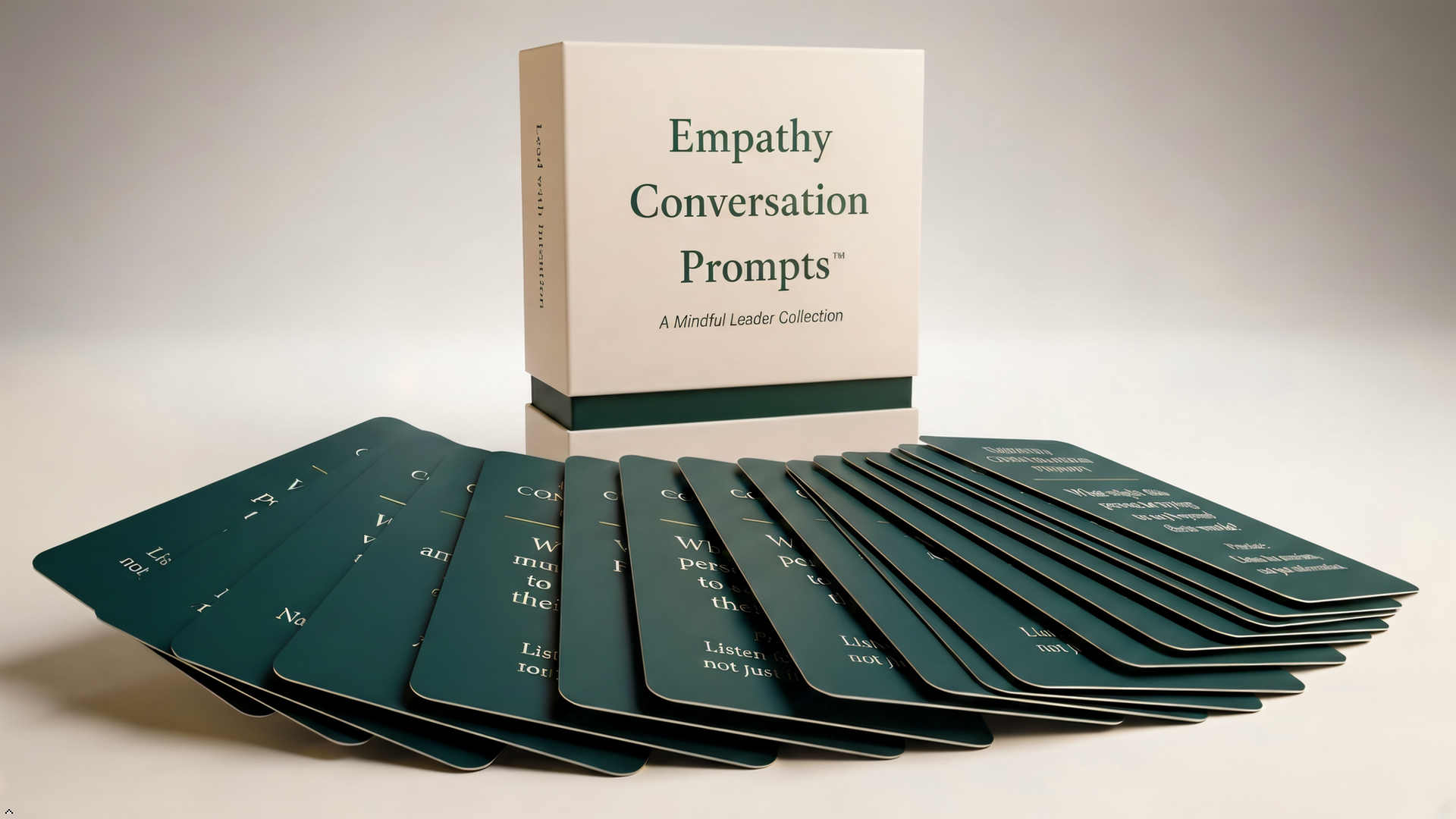
The fix isn’t complicated, but it does require a different starting point. Define the behavior change you want before you design the session. Decide what should look different in how someone leads, communicates, or makes decisions, and then design toward that outcome deliberately. If the target is better conversations, a simple set of structured conversation prompts can give people something concrete to practice with instead of a vague instruction to communicate better.
That’s a different discipline than designing for engagement. It means asking, before a single slide gets built, what a participant should be doing differently ninety days out, and building the way you’ll know into the program itself rather than bolting it on afterward as a survey.
A Practical Starting Point
If you don’t know where to start, pick one program on your calendar this quarter and ask three questions before you touch the curriculum. What should someone be doing differently ninety days after this program that they aren’t doing today? How would you know, concretely, that it happened? Who besides the participant would notice the difference?
Those three questions will do more to protect your budget than any amount of polish on the materials themselves.
The Programs That Survive the Next Budget Cycle
Leadership development doesn’t have a value problem. It has a proof problem. The programs that survive the next round of cuts will be the ones engineered for evidence from the first design decision, not the ones hoping a strong satisfaction score will carry the conversation.
If you’re responsible for a leadership development budget, or you’re the one building the case for one, start here: name the behavior you’re trying to change, and build the way you’ll prove it changed before you build anything else. I laid out how to measure capability instead of course completion in more detail if you want the full breakdown.