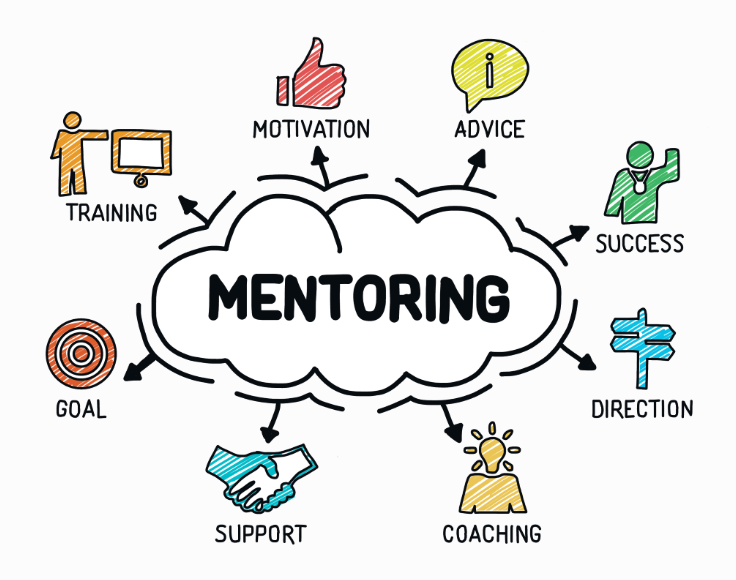
Mentorship is comfortable. Sponsorship is uncomfortable. The careers that move are built on the second.
For most of my career, my professional relationship map was heavy on mentors and light on sponsors. I suspect that is true for most of you, and the data agrees. The McKinsey Women in the Workplace 2026 release just confirmed what the Wiley research on the emergence and effects of sponsors for women leaders has been showing for two years. Only 31 percent of entry-level women have a sponsor, compared to 45 percent of men. Researchers keep finding that gap explains more of the broken rung than any other variable they isolate.
I want to spend a few minutes on the difference, because most of us are still doing this on hard mode without realizing it.
Mentorship Gives You Perspective. Sponsorship Spends Political Capital.
A mentor talks to you. A sponsor talks about you. That distinction sounds small until you realize it is the entire game.
When a mentor sees a problem in your work, they meet you for coffee and walk you through it. That is real value, and I do not want to diminish it. But when a sponsor sees you ready for the next role, they walk into a closed-door succession planning meeting and put your name on the list. They attach their reputation to your advancement. They take on risk. That is a different kind of investment.
If your professional development conversations have been heavier on the first kind than the second kind for years, you are not lacking insight. You are lacking advocacy. Those are not the same problem and they do not have the same solution.
Sponsorship Is a Request, Not a Hope.
One of the harder pieces of feedback I had to internalize is that sponsorship is something you ask for. Most of us are waiting to be sponsored the way we were mentored, where someone picks us out of the crowd and offers. It does not work that way at the level where it matters most.
“Will you put my name forward for this role” is a different conversation than “Can we have coffee.” It feels presumptuous. It is not. It is precise. The most respected leaders I know are not offended by it. They are relieved by it. Knowing exactly what advocacy you are asking them for makes it easier for them to give.
The ask itself also signals readiness. Senior leaders are watching for evidence that you understand how advancement actually works at their altitude. A clean, specific sponsorship request is one of the strongest pieces of evidence you can offer.
Build a Sponsor Portfolio, Not a Single Champion.
The model I should have used a decade earlier is portfolio thinking. Not one sponsor, not even two, but a deliberate set of senior leaders who each see a different dimension of your work and are each willing to spend a different kind of political capital on your behalf. One sponsors you for visibility. One sponsors you for opportunity. One sponsors you for protection in tough rooms.
The strongest sponsorship portfolios are not the longest ones. They are the right relationships, with the right authority, with the right willingness to advocate. Quality of capital, not quantity of contacts.
Diversification matters here for the same reason it matters in any other portfolio. A single champion is a single point of failure for your trajectory. When that person leaves the company, retires, or simply runs out of political capital on your behalf, your advancement plan goes with them.
Reciprocate the Capital. Deliberately.
The piece of sponsorship that does not get talked about enough is the reciprocity. The strongest sponsorship relationships are the ones where the person being sponsored makes the sponsor look good in return. You are not just receiving advocacy. You are demonstrating that the advocacy was a smart bet.
That looks like delivering on the role they put you forward for. Sending a quick note when their team succeeds. Connecting them with someone in your network who solves a problem they mentioned. Treating their political capital with the same care you would want them to treat yours. Sponsorship is a relationship, not a transaction, and the people who succeed at it understand that without being told.
The Sponsor Conversation You Are Not Having Yet
If your relationship map is mentor-heavy, audit it this quarter. Look at the names. Ask which of them have positional authority in rooms you are not yet in. Of those, ask which ones have ever advocated for you out loud, in front of others, in a way that moved your trajectory. That is your real sponsor count.
If the number is low, that is the number to grow. Not your follower count. Not your mentor count. The count of senior leaders who are willing to spend their political capital on your advancement.
Pick one senior leader this month and have the sponsorship conversation. Tell them what role you are aiming for. Tell them what you would need them to do to advocate for you. Ask them, plainly, if they are willing. The worst outcome is a polite no, and a polite no is still useful information about your portfolio.
The data has been telling us this for years. The script around our development has not caught up. It is on us to update it.