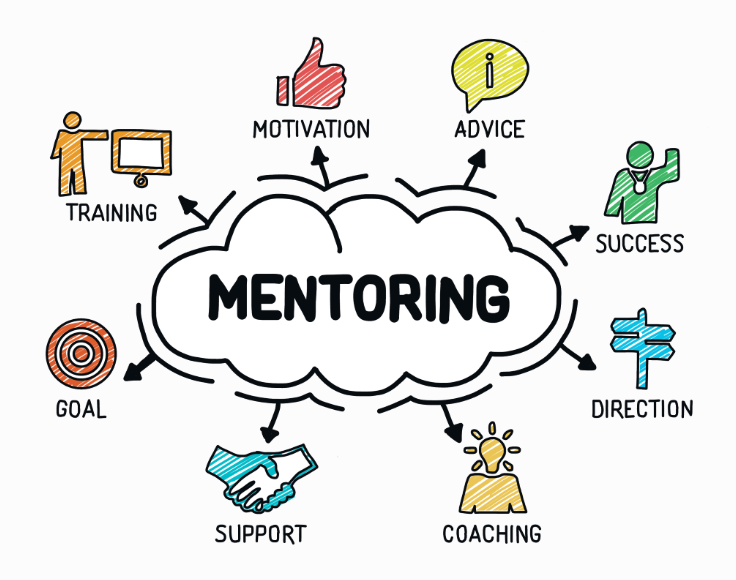
If you have been told you need more mentors, you are getting half the strategy. The data is now clear. Mentorship gives you skills. Sponsorship gives you access. Most professional women are funding the first and starving the second, and the cost shows up in the promotion data every year.
McKinsey’s 2025 Women in the Workplace report should have ended this conversation a year ago. For every 100 men promoted to a first manager role, only 81 women make the leap. The broken rung has barely shifted in a decade. The numbers behind it are damning in a way most career advice has not caught up to.
Mentorship and Sponsorship Are Not the Same Career Strategy
This is the distinction most career coaching still gets wrong.
A mentor talks to you. A sponsor talks about you. A mentor tells you what to work on. A sponsor says your name in a room you are not in. A mentor offers advice. A sponsor offers reputational capital.
One develops you. The other deploys you. They are not the same function and they cannot be substituted for one another. When organizations fund mentorship and call it advancement, they are funding the wrong layer. When professionals collect mentors and treat them as a complete career strategy, they are building skill without building access.
The Sponsorship Gap Is Bigger Than the Ambition Gap
Only 31 percent of entry-level women have a sponsor. The comparable number for entry-level men is 45 percent. That is a 14-point gap at the exact career stage where access compounds the fastest.
Employees with sponsors are promoted at nearly twice the rate of those without. Compound that gap across three or four promotion cycles and you have built the senior representation gap most organizations are trying to close from the wrong angle.
This is not a confidence problem. This is not an ambition problem. This is a sponsorship infrastructure problem, and the data has been pointing at it for years.
What Most Women Are Being Told to Do, and Why It Is Not Working
The standard advice is some variation of three things. Build your network. Increase your visibility. Find a mentor.
Each of those is fine on its own. None of them are sponsorship.
You can build a wide network and still not have a single person advocating for you in a promotion conversation. You can increase your visibility and still not be in consideration when a role opens up two levels above you. You can have a brilliant mentor and still be coached, year after year, into roles that do not advance your trajectory.
Visibility without advocacy is a polished plateau, not a career.
What to Do Instead
- Identify the right people. Sponsors are people with positional power who can open doors for the role you want next. Not the role you are in. The role you want next. Mentors can come from anywhere. Sponsors come from a much smaller set of seats.
- Tell them what you want, in specific terms. “I want to grow” is not actionable. “I want to lead the X portfolio in the next 18 months” is. Sponsors cannot advocate for ambiguous ambition. They need something they can repeat in a room.
- Give them something to advocate with. Sponsors need ammunition. Make sure they have a recent, concrete example of your work they could reference confidently in front of their peers. The example matters more than the relationship warmth.
- Make the ask explicit. Most sponsorship relationships fail because the would-be sponsor was never told they were the would-be sponsor. The ask can be simple. “Would you be willing to advocate for me when the next opportunity opens up at your level?” The question itself is the relationship.
The Harder Question
If you have been told you need more visibility, ask this instead.
Who in this organization has the authority to say my name for the role I want next, and what specifically do they know I am working on?
If the answer is no one, that is the gap. The gap is not your ambition, your readiness, or your resume. The gap is that no one with positional power is currently mobilizing on your behalf.
Why This Matters Now
The 2025 data is not a single bad year. It is a decade-long pattern that has not responded to the strategies most organizations and most women are using. The next decade will not respond either, unless the strategy changes at the variable that actually moves the outcome.
Sponsorship is the highest-leverage variable in a career. It compounds in ways mentorship does not. It opens doors mentorship cannot. And it is still the one most women are being coached to underweight.
Fix that variable and the rest of the strategy starts to compound. Ignore it, and you will keep doing brilliant work in roles that do not advance.
The career strategy that closes the gap is not the one that develops you the most. It is the one that deploys you the fastest. Choose sponsors deliberately and the math finally starts to work in your favor.