Somewhere on your team right now, someone is doing everything they are supposed to do. They show up. They hit their numbers. They answer the messages on time. And they have already checked out, in every way that matters except the paycheck.
This is quiet cracking. It is not the same conversation as quiet quitting, and the difference matters. Quiet quitting was about doing the minimum required and nothing more. Quiet cracking is quieter than that. Performance holds steady while commitment erodes underneath it. The dashboards stay green. The person is already gone. I’ve written about this exact pattern before, in a piece on why your highest performer is probably not as fine as they look.
New data backs up what I have been hearing in leadership rooms all year. More than half of US employees are showing at least one sign of quiet cracking, and one in five show it frequently. That is not a fringe problem. That is a majority of the workforce, and most leaders have no system built to catch it.
Why Your Metrics Miss It
Most performance systems are built to catch a drop in output. Quiet cracking does not produce a drop. It produces a person who is technically fine and quietly done. They stop raising their hand in meetings. They stop pushing back on decisions they used to challenge. They do the job as written and nothing beyond it. None of that shows up on a scorecard built around deliverables, so leaders keep watching the wrong thing while the real signal happens in the room, not on the spreadsheet. I’ve made the same point from the leadership-development side — this is exactly the kind of risk no dashboard is built to catch.
The result is that most leaders find out about disengagement the way they always have: too late, in an exit interview, after the person who could have stayed has already decided to go.
Job Hugging Is Making It Worse
Add a tight labor market to the mix and you get job hugging, people staying in roles they have mentally left because the alternative feels riskier than staying put. That combination, quiet disengagement plus nowhere better to go, is exactly the environment where cracking spreads and goes unnoticed. People are not leaving. They are just not really there, and they can stay in that state for a long time before anyone names it.
The Real Gap Is a Manager Capability Gap
Here is the part that gets missed in most of the coverage on this topic: quiet cracking is not primarily an individual wellness issue. It is a management design and capability gap. Most managers, especially first-time managers, were promoted because they were good at their own job, not because anyone trained them to read a team’s engagement. A majority of managers step into the role without any formal training in how to do it. Nobody taught them to notice when a strong performer goes quiet in a different way than usual, or to treat that shift as data worth acting on. That gap is close cousin to another one I’ve dug into — why empathy was never actually the missing ingredient people assumed it was.
So the wellness perk gets rolled out. The engagement survey gets sent. And the actual gap, a manager who was never taught to ask the right question at the right moment, stays exactly where it was before the survey results came back.
What Actually Catches It Early
In the leadership conversations I lead with executive teams, the shift that makes the difference is almost always the same. Managers need language and a cadence for real check-ins, not another survey. In practice that looks like:
- Asking about energy and ownership, not just status and deadlines, in regular one-on-ones.
- Noticing when someone who used to push back has gone quiet, and naming that shift out loud instead of letting it pass.
- Building a habit of asking what has changed for someone lately, instead of only asking what is on their plate.
- Giving managers explicit permission to have that conversation even when performance looks fine on paper.
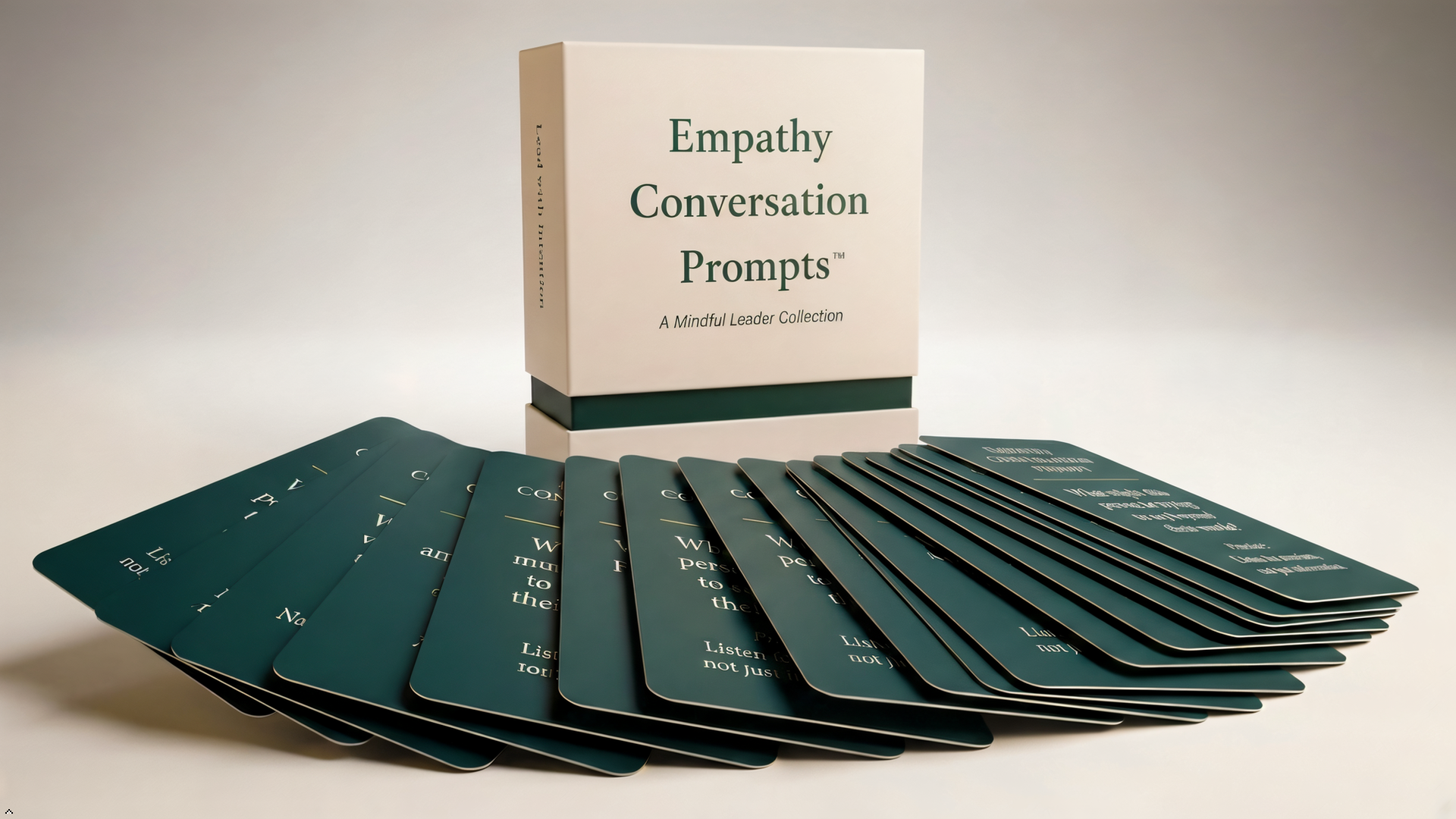
None of that is complicated, but it helps enormously to have the right prompts ready for the harder version of that conversation. None of this requires a new platform or a bigger budget. It requires managers who have been shown how to look past the dashboard and into the person actually doing the work.
What This Costs If You Wait
The expensive version of this story always looks the same from the outside. A strong performer resigns. The team is surprised, because the numbers looked fine. The exit interview reveals they had been disengaged for months, sometimes longer. By then the cost is not just one departure. It is the knowledge, relationships, and institutional memory that walked out with them, plus the signal it sends to everyone else who noticed and said nothing.
Waiting for the exit interview to explain the problem is the most expensive way to learn about it.
The Leaders Who Get Ahead of This
The organizations addressing quiet cracking well in 2026 are not waiting for the next engagement survey to tell them what already happened. They are building manager capability deliberately, treating the ability to read a team’s real engagement as a core leadership skill rather than a soft add-on to the job.
If your best people look fine on paper, that is exactly when it is worth looking closer. The ones who are quietly cracking are usually the ones you can least afford to lose, and they are almost never the ones who tell you first.