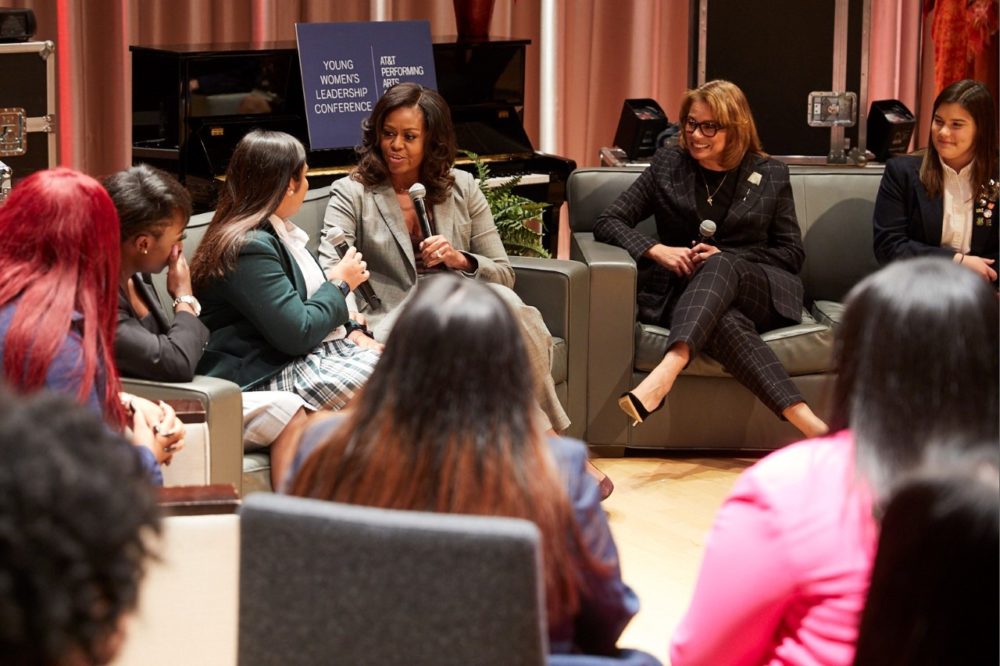
At an event I led last week, a senior leader admitted to the room that they did not yet know how AI would change their team’s work. I watched the energy shift. People leaned in. A few minutes earlier, someone more polished had performed total confidence about an AI rollout, and the room had quietly checked out. That contrast has stayed with me.
The Pressure to Perform Certainty
There is enormous pressure on leaders right now to sound certain about AI. To have a plan. To project that they are somehow ahead of a technology that is changing faster than any of us can fully track. The instinct is understandable. We were taught that leadership means having the answer, and that admitting a gap looks like weakness.
But the people we lead are not fooled by a confident voice. They can feel the difference between real clarity and a performance covering for none. And they are paying closer attention than usual, because the stakes feel personal. Frontline managers are about three times more likely than executives to worry about what AI means for them and their teams. When someone at the front of the room performs certainty they do not have, the audience most affected is exactly the one most likely to see through it.
Why the Honest Move Builds Trust
Here is what I keep seeing across the rooms I lead. Trust does not come from having the answers. It comes from naming the unknown honestly and then inviting people into the work of figuring it out. The leader who says, I do not have this fully figured out yet, and here is how we are going to work it out together, does something the polished performer cannot. They tell the truth, and they hand people a role in what happens next.
That combination is what draws a room in. Honesty without a path forward is just anxiety shared upward. Confidence without honesty is a performance people stop believing. The credible move is both: name the reality plainly, and offer a way to move through it together.
What This Sounds Like in Practice
You do not need a script, but it helps to know the shape of it. Leading through uncertainty honestly usually sounds like a few things:
- Name the unknown directly. Say what you do not yet know, without softening it into corporate fog.
- Separate what is settled from what is open. People can hold uncertainty far better when you tell them which parts are stable.
- Give them a role. Invite the questions, the pushback, the experiments. Uncertainty shared as a joint project feels different from uncertainty announced as bad news.
- Come back with what you learn. Honesty once is a moment. Honesty repeated is trust.
The Cost of Pretending
We are all early in this. Every leader I know is figuring out AI in real time, including the ones who sound the most sure. Pretending otherwise does not make anyone on your team safer. It just tells them you would rather look ready than be honest with them. And once a team senses that trade, they stop bringing you the real problems, because they have learned that this is a room where appearances matter more than truth.
The irony is that the fear of looking uncertain is what actually erodes authority. The leaders who hold their teams through hard, ambiguous seasons are almost never the ones who had all the answers. They are the ones who were honest about what they did not know and steady about how they would find out.
Say the True Thing
So the next time you are standing in front of a room that wants certainty you cannot honestly give, resist the pull to perform it. Say the true thing. Tell them what you know, tell them what you do not, and tell them how you plan to close the gap together. It is not the weak move. It is the most credible one you have, and in a season this uncertain, credibility is the only thing that will keep people with you.